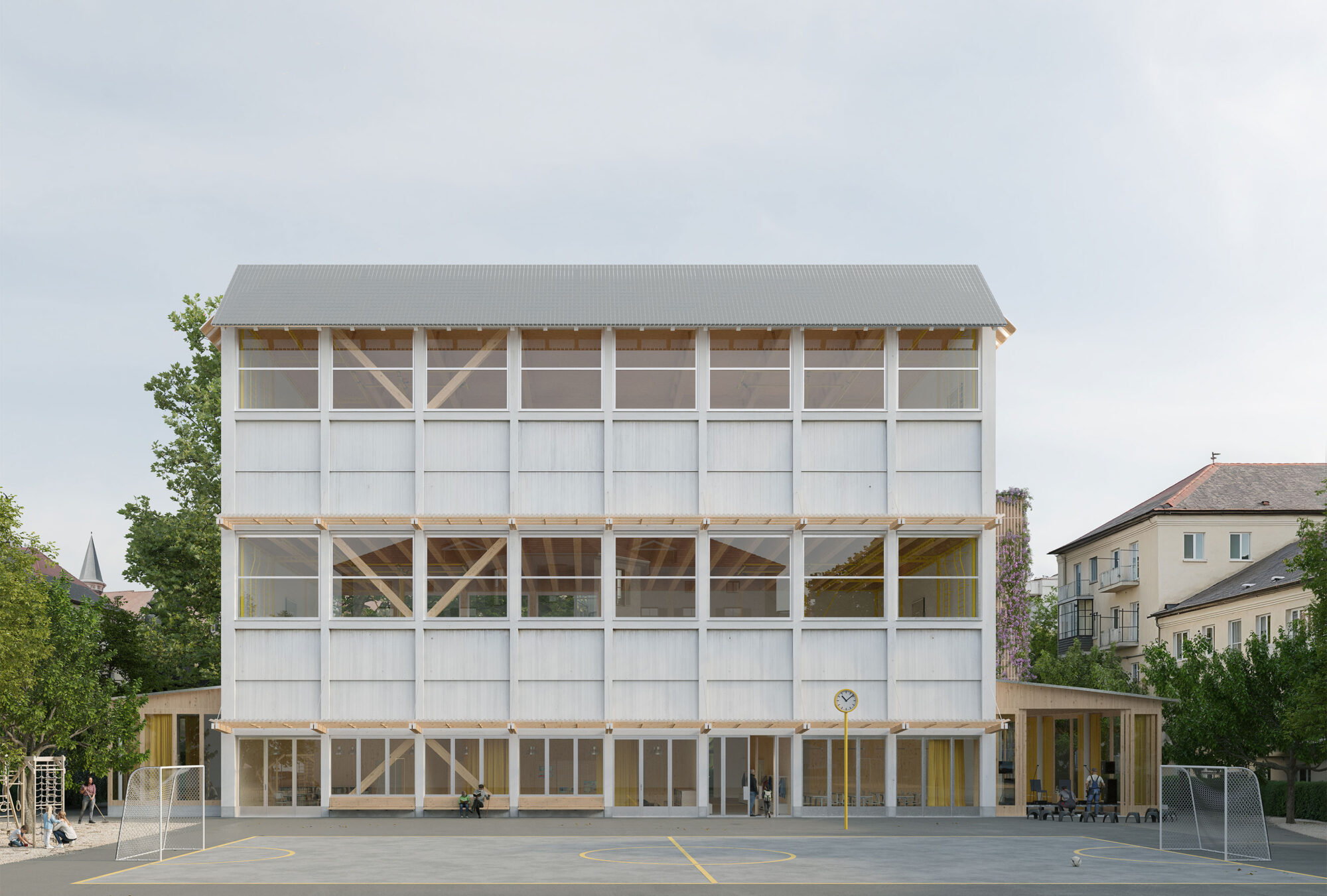
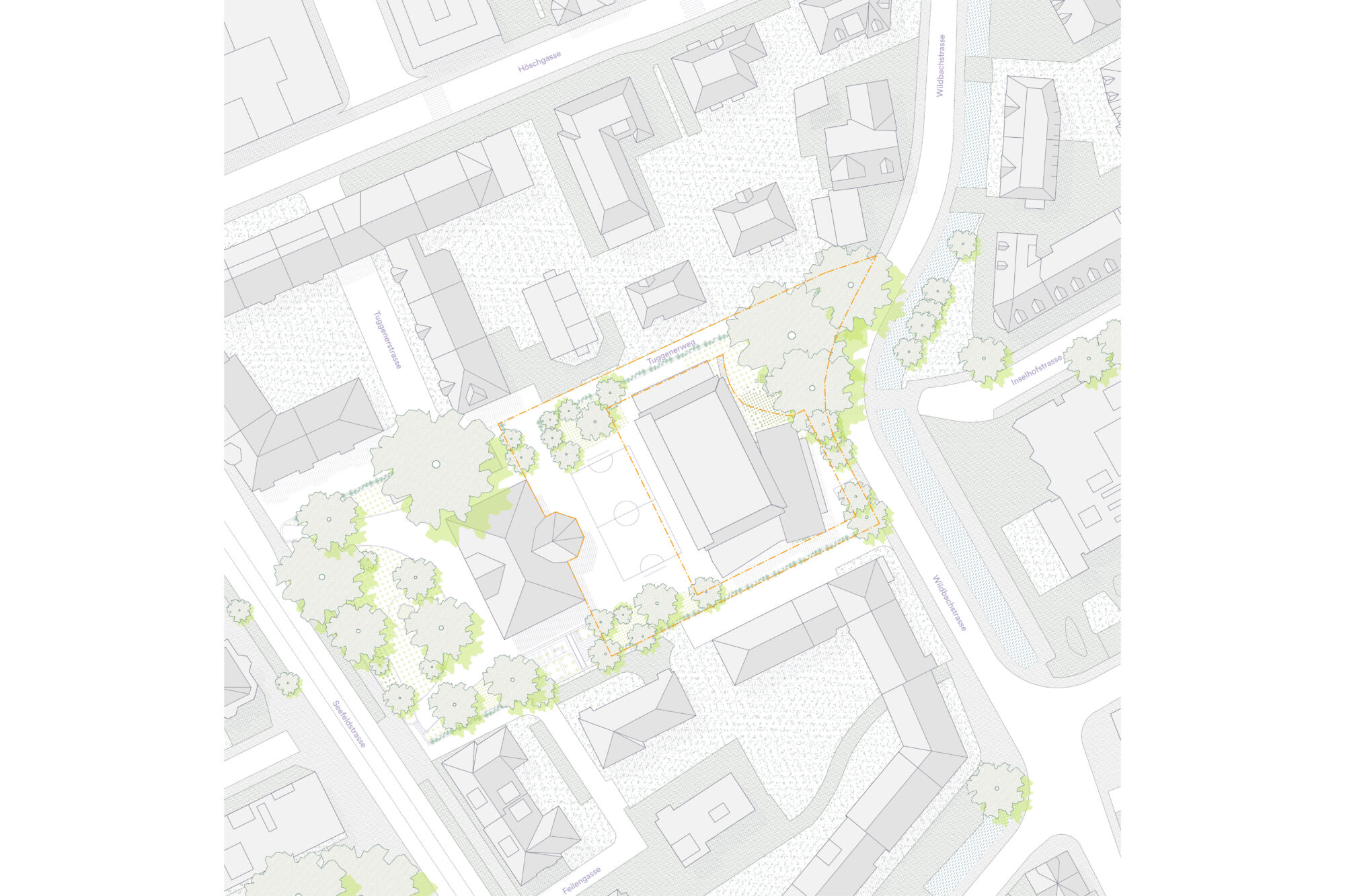
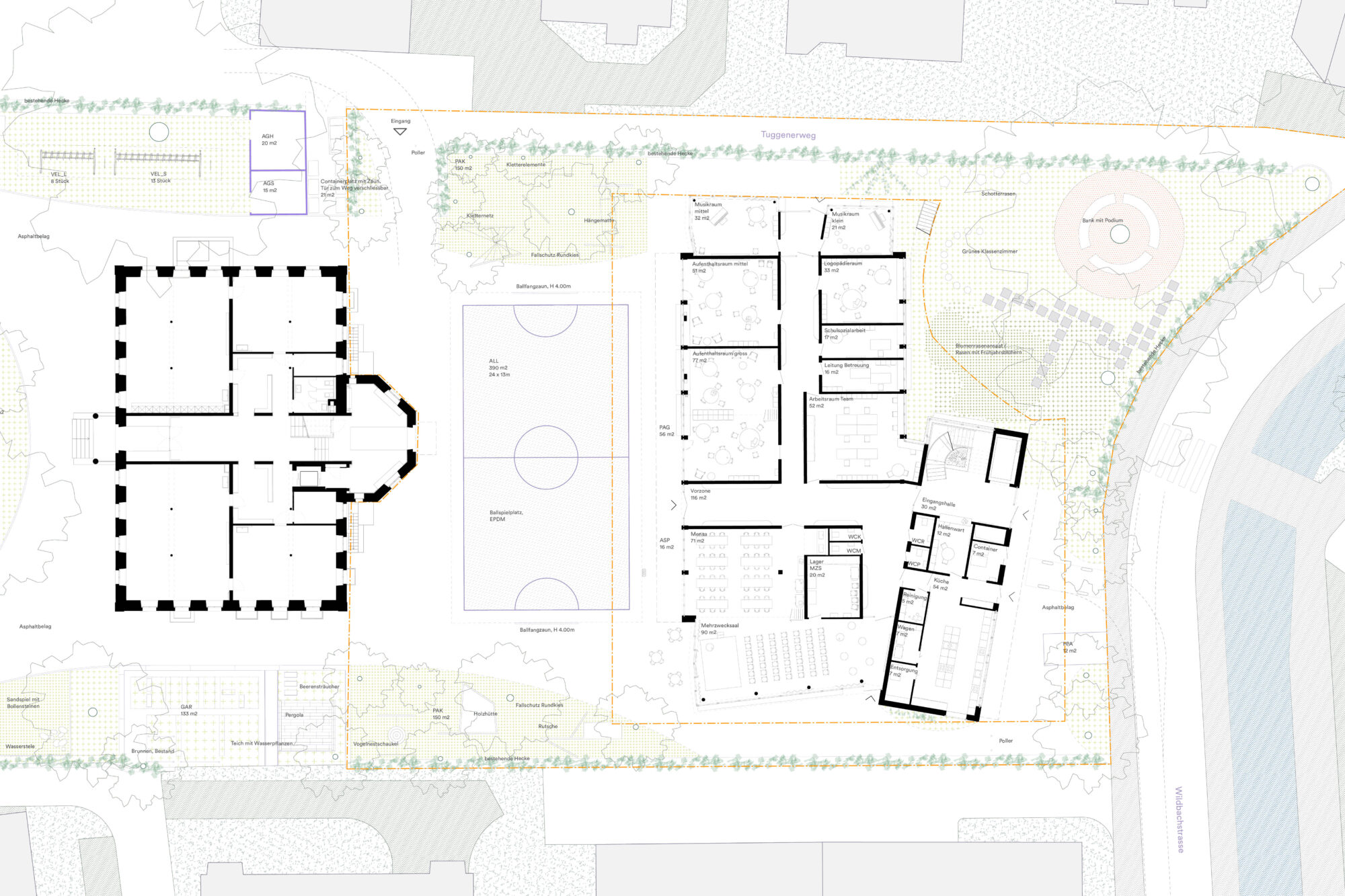
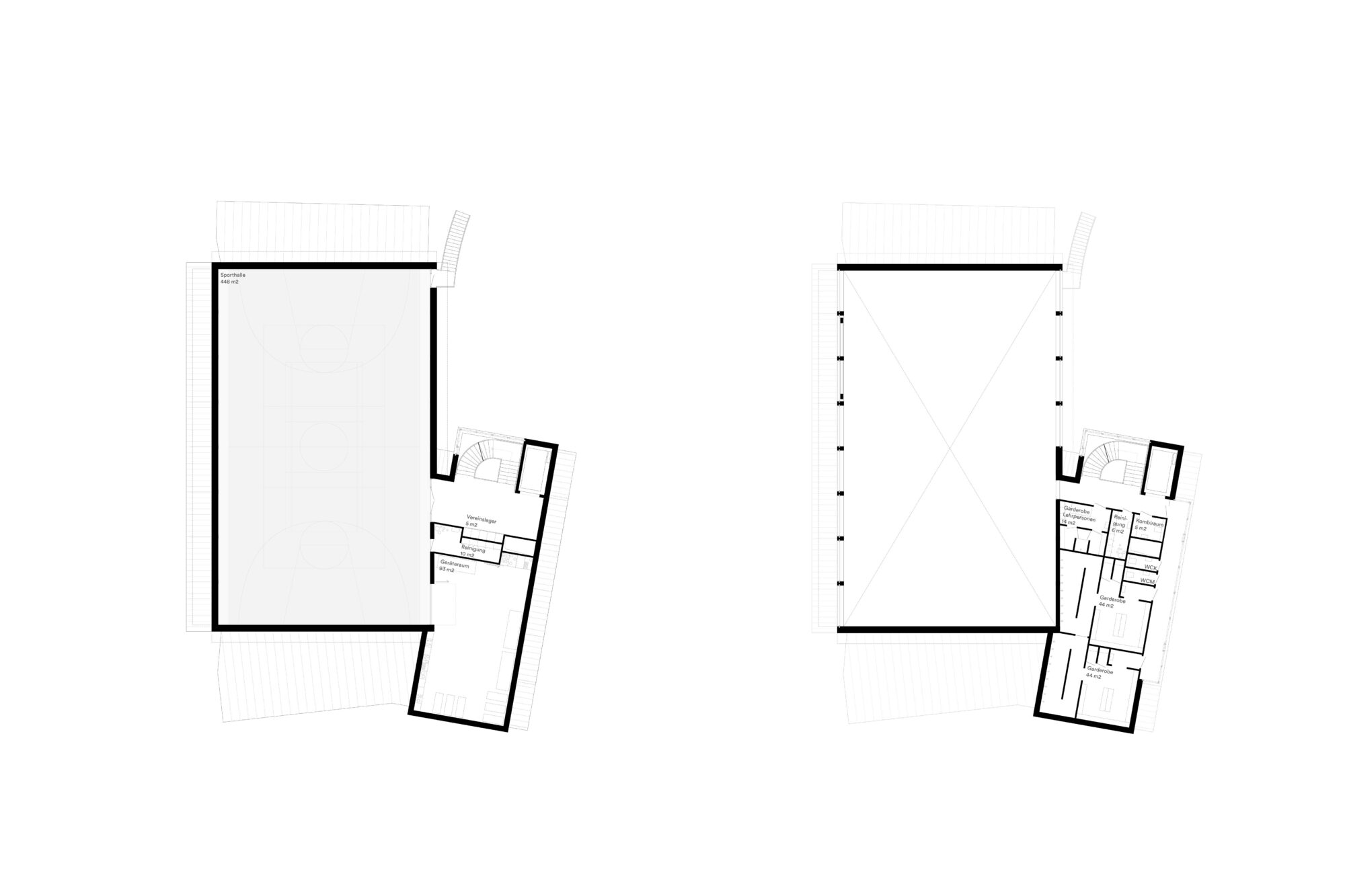
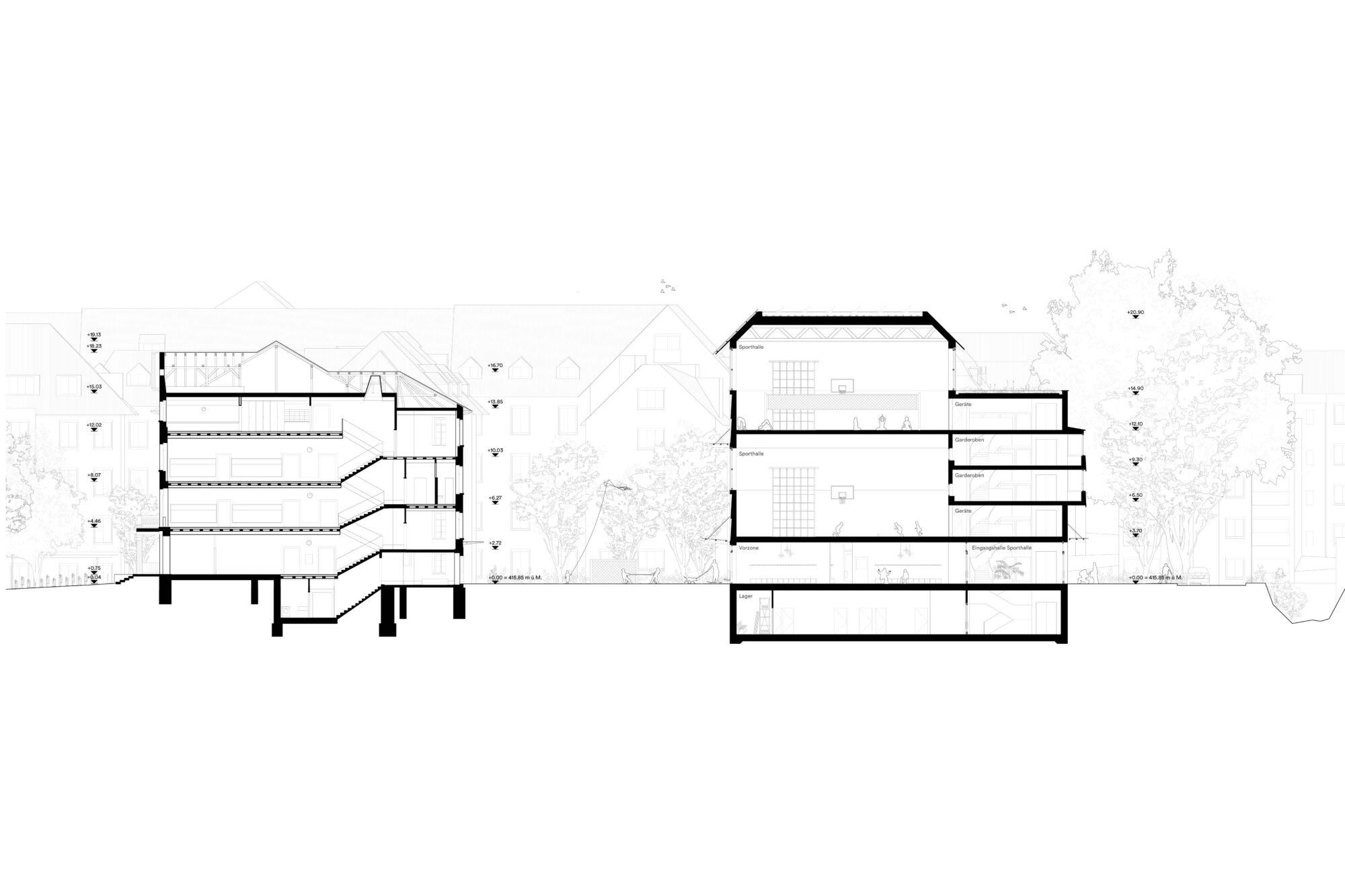
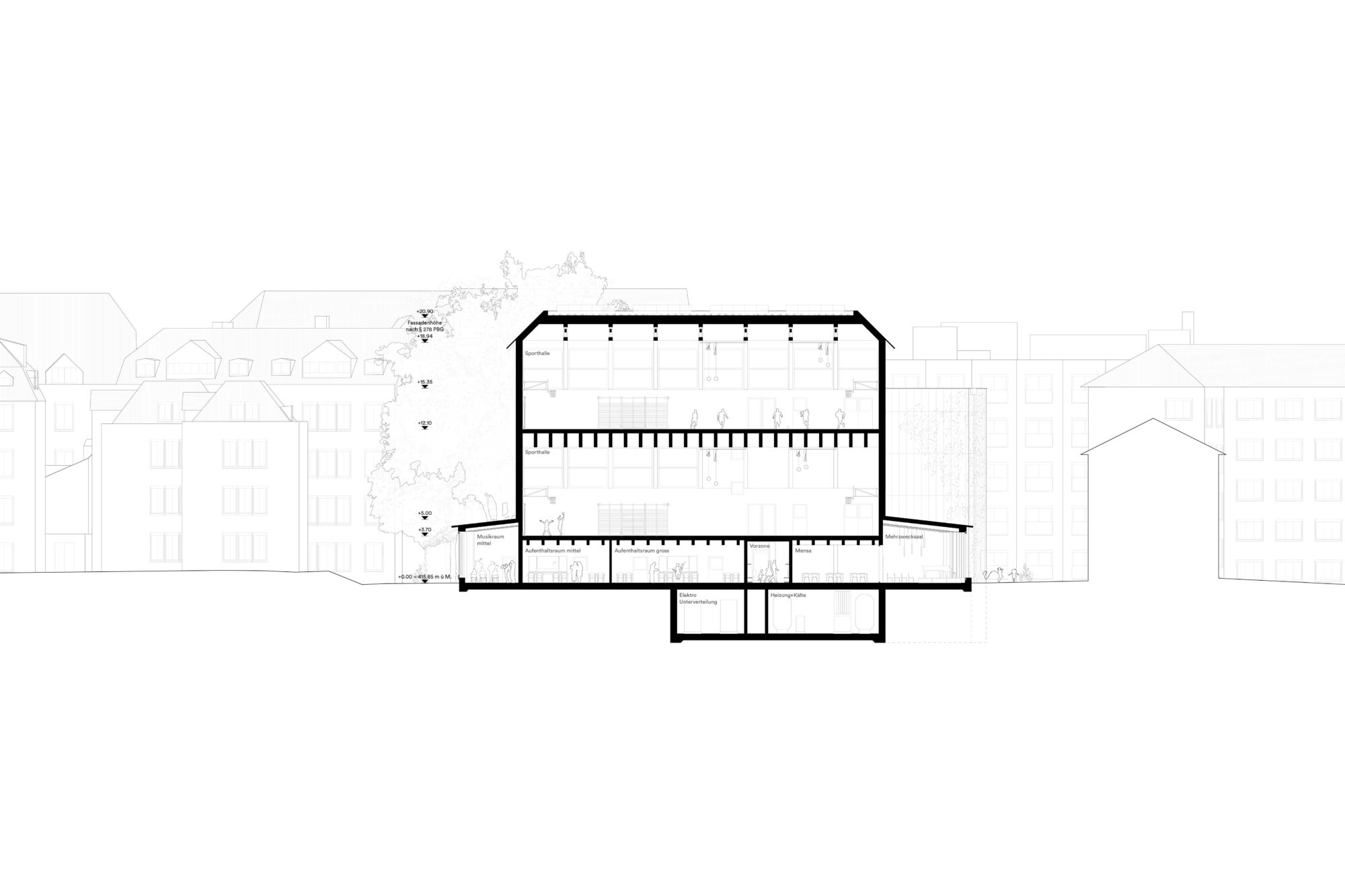
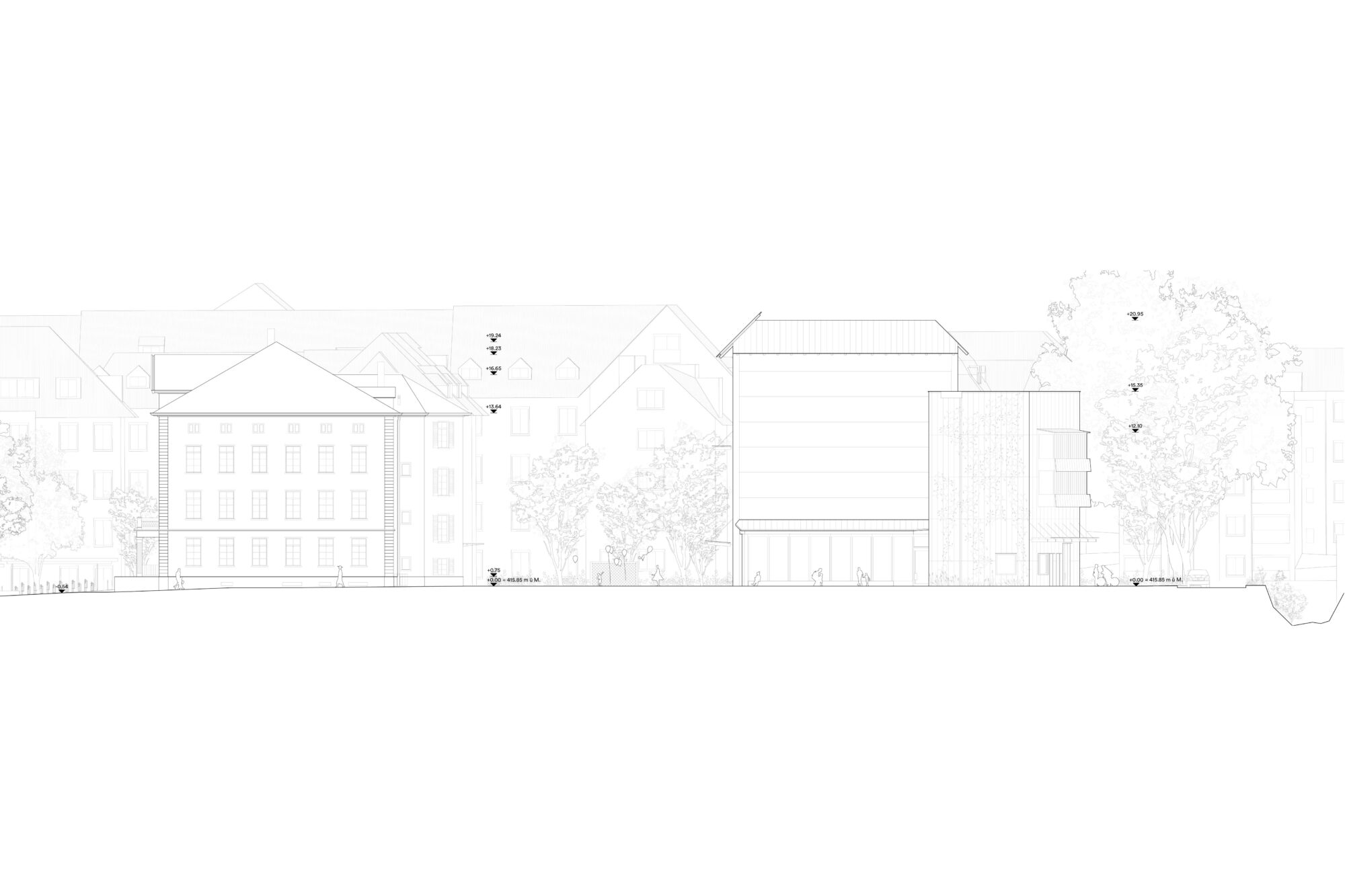
The main volume contains two vertically stacked sports halls with childcare facilities on the ground floor. The multi-purpose hall and music rooms are attached at the ends of the main volume, enabling the required room heights within an efficient building envelope. Along Wildbachstrasse, a five-storey wing accommodates ancillary sports spaces and vertical circulation alongside existing mature trees. Its slight rotation follows the curve of the street and defines an external entrance to the sports halls near the kitchen and delivery area.
The outdoor spaces are designed with simplicity and consistency and are structured into different zones that support a variety of uses for the school and surrounding neighborhood. The landscape concept reinforces functional connections and contributes to a coherent overall setting.
Despite its substantial size, the building integrates well into its surroundings through its articulated form and distinctive roof profile. The timber façade, with a clearly legible structural logic, is protected by canopies and photovoltaic installations on the school-facing side. Its material expression references the village-like architectural character of Riesbach at the time the school complex was originally developed.
Ground-floor spaces, including childcare areas and the multi-purpose hall, actively engage with the outdoor areas and create a lively interface between inside and outside. Circulation between the changing rooms and sports halls is organized through elongated corridors with direct visual connections to the surrounding green spaces.
The project’s emphasis on sufficiency and the predominantly above-ground organization of uses supports economic efficiency and sustainability. With a compact basement for technical facilities and an efficient skeletal structure for the upper floors, it achieves low costs and greenhouse gas emissions. A thorough engagement with context, program, and sustainability, transforms the challenges of the task into architectural quality.
Landscape: August + Margrith Künzel Landschaftsarchitekten
Structure: Pirmin Jung
Renders: OUT OF RAM
Team Weyell Zipse: Marina Bruno, Juan Colomina, Christian Weyell, Kai Zipse